Albeit free, Gmail limits you in terms of how big attachments allowed before it will be uploaded to Google Drive instead. Anything larger than 25 MB will be sent to the storage service and if you doing it very often, you may need to clean them before hitting the maximum capacity.
Luckily, Gmail has recently rolled out a new filter that allows you to search for large emails in an instant. You can even narrow down the search by choosing a specific folder, such as Inbox, Sent Mail, Trash, Drafts, and more.
Here’s how you can find large emails in Gmail and manage them.
1. Go to Gmail desktop. This size filter is yet to be available in the mobile app version.
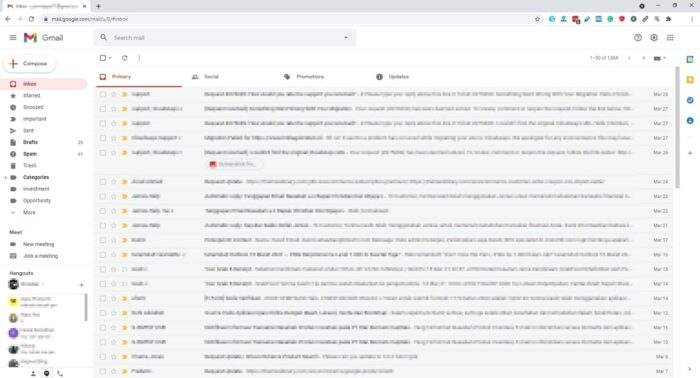
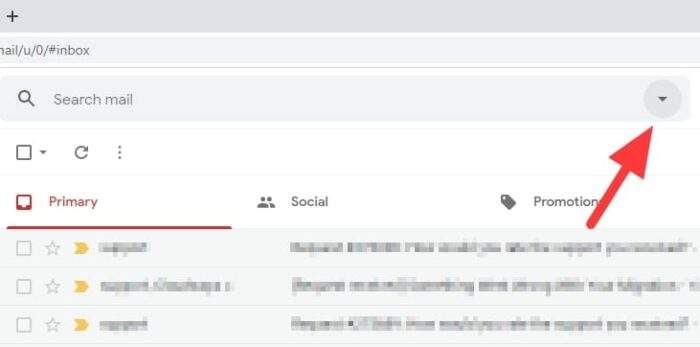
2. In the search bar, click the dropdown icon.
3. Now select the size to be greater than 25 MB since it’s the limit before attachments being stored to Google Drive.
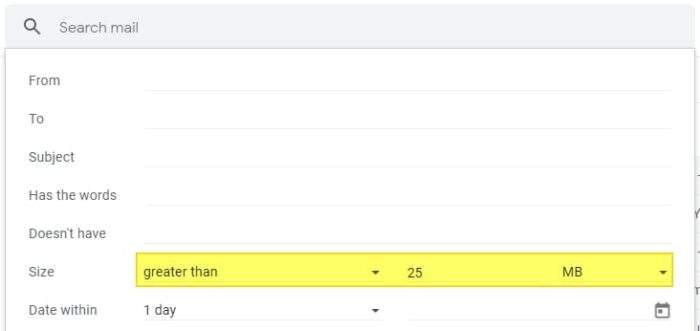
4. Also select the search within Sent Mail as it’s the one that consuming your storage. Next, click Search.
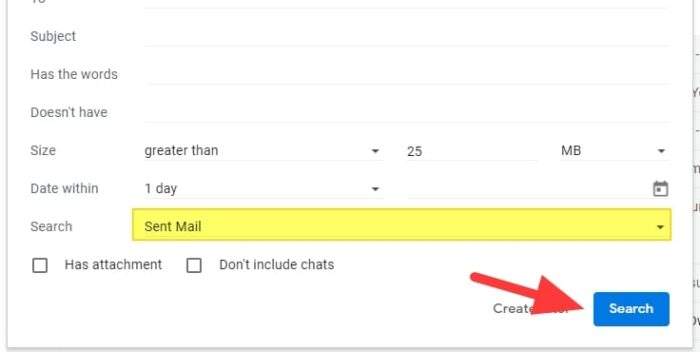
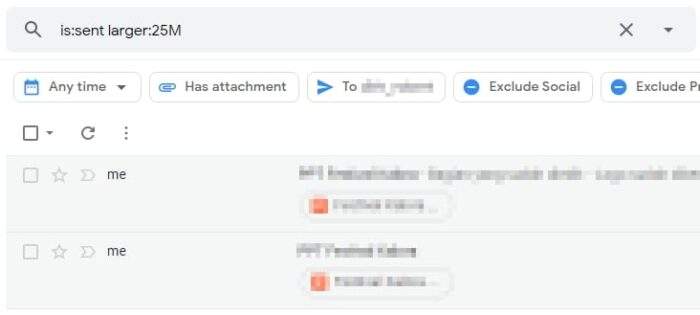
5. You will see emails result based on the filter.
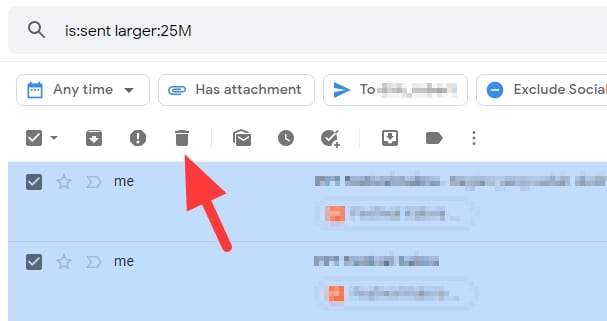
6. Select emails and click Delete to move them to Trash folder.
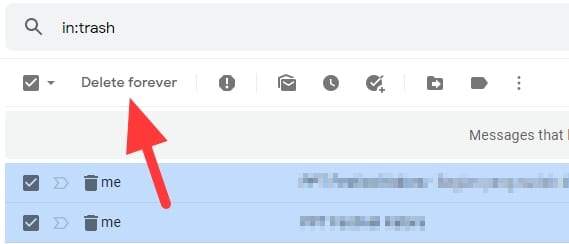
7. Emails in Trash will be deleted after 30 days but you can delete them permanently now. Just head to Trash, select the emails and click Delete forever.
With recent updates, Google is increasingly strict their ‘free storage’ lineups. Google Photos that used to be free is now going to count the 15 GB storage cap on your Google Drive account beginning of June 1, 2021. That’s why it’s good to regularly find large files in Google Drive and delete them for good.
Anyway, I hope you found this guide helpful. Any feedback is appreciated.
Additional Tips to Manage Gmail Storage Effectively
Streamline your Gmail experience
If you’re constantly running out of storage, consider these additional strategies to optimize your Gmail account:
Use Google Storage Manager for a quick overview
Google Storage Manager is a handy tool that provides a detailed breakdown of your storage usage across Gmail, Google Drive, and Google Photos. It highlights large files and emails, making it easier to clean up unnecessary data. You can access it via your Google One account.
Archive instead of delete
For emails you might need later but don’t want cluttering your inbox, use the archive feature. This removes them from your primary inbox while keeping them accessible via search.
Leverage third-party tools
Tools like Clean Email or Mailstrom can help you bulk-manage emails by size, sender, or age. These services are particularly useful for decluttering without manually sorting through each message.
Automate email management
Set up filters to automatically label and categorize incoming emails. For instance, create a rule to send all promotional emails to a specific folder for easy bulk deletion later.
Backup important attachments
Save essential attachments to Google Drive or an external storage device and delete the original emails. This keeps your Gmail account lean while preserving critical files.
FAQ
How do I prevent my Gmail storage from filling up too quickly?
Regularly delete large emails and attachments using search operators like larger:10M. Also, unsubscribe from unnecessary newsletters and set up filters to manage incoming mail efficiently.
Can I increase my free Gmail storage?
While the default free storage is capped at 15 GB across all Google services, you can purchase additional space through Google One or combine multiple accounts using tools like CBackup.
What happens when my Gmail storage is full?
You won’t be able to send or receive emails until you free up space. Additionally, syncing with other Google services like Photos and Drive may stop.
For more tips on managing Gmail and Google Drive effectively, visit Google’s official support page or explore tools like Filerev for automated cleanup!